Solar powered pumps are an innovative and sustainable solution that contributes to improving agricultural efficiency and meeting water needs in remote agricultural areas. These pumps convert solar energy into electrical power, allowing water to be pumped from its original sources, such as wells and rivers, without relying on traditional electrical grids or fossil fuels. These pumps harness solar energy to power the irrigation system, helping to reduce operating costs and carbon emissions. In this article, we'll explore how to choose the right solar pump and the key benefits of solar-powered irrigation.

Solar powered pumps
They are systems that use solar energy to run water pumps, where sunlight is converted into electricity by solar panels. This electricity is used to power pump motors that draw water from wells, rivers, or other sources and direct it to irrigation systems or water tanks. Solar powered pumps consist of the following components:
- Solar panels: collect sunlight and convert it into electrical energy.
- Control unit: Regulates the flow of electricity and controls the operation of the pump.
- Pump: Powered to pump water.
- Batteries: used to store energy during non-sunny times.
- Support Structure: Mounts the solar panels at a right angle to ensure maximum energy absorption.
How to choose a solar pump for suitable agriculture
When choosing Solar powered pumps, there are several key factors to consider to ensure they effectively meet your irrigation needs. These factors include:
- Determine water needs: The amount of water required for irrigation must be calculated based on the type of crops, land area, and daily irrigation requirements. Irrigation needs vary between crops; It is therefore important to specify these requirements precisely.
- Depth of the water source: You must know the depth of the water source (such as a well or river); Because this affects the type of pump required, as submersible pumps are suitable for deep sources, while surface pumps work well with sources near the surface.
- Soil type: The type of soil affects the amount of water required. For example, dry soil may need a pump with a larger pumping capacity to ensure more water savings.
- Solar radiation rate: The solar radiation rate in the area must be studied, as this affects the efficiency of the solar panels and their ability to generate the energy needed to operate the pump.
- Choosing an irrigation system: Choosing a pump also depends on the irrigation system used. For example, drip irrigation systems require low-flow pumps, while sprinkler systems need higher flows.
- Maintenance and Cost: Long-term maintenance costs must be considered,The pumps Solar typically requires less maintenance compared to traditional pumps, making them an economical option in the long run.
- Technical Support Guarantee: Ensuring that there is a warranty and technical support service available with the company to help in the event of any problems with the pump is very important.
Types of Solar powered pumps
Considered Solar water pumps An ideal choice for agriculture, it provides an effective and sustainable solution for pumping water on agricultural land. There are several types of Solar powered pumps, and each type has its advantages and its uses Private. The most important of these types are the following:
Solar irrigation pumps submersible pumps
They are pumps installed underwater, usually used in wells or reservoirs. These pumps are effective in extracting water from depths, making them suitable for large farms that need large amounts of water. It has many features such as:
- It has high water pumping efficiency.
- Works well in harsh environmental conditions.
Surface pumps
These are a special type of Solar powered pumps. These pumps are installed above ground and are used to pump water from nearby sources such as rivers or ponds. They are suitable for small farms and areas that don't require pumping water from great depths. They offer several advantages, such as:
- Easy to install and maintain.
- Low operating costs.

Centrifugal pumps
They are pumps that raise water pressure by converting kinetic energy into pressure.
They are commonly used in irrigation systems where a constant flow of water is needed. It has many features such as:
- Effective in pumping large amounts of water at high speed.
Positive displacement pumps
These pumps work by confining water to a fixed volume chamber, thus forcing the water out of the pump So useThis pump is practical in areas requiring high pressure, such as pumping water to great heights. It has many advantages, such as:
- They provide constant pressure and are used in applications that require precision in water pumping.
Solar irrigation pumps DC pumps
These pumps work directly with solar panels without the need for an inverter, and are ideal for use on small farms or applications with limited amounts of water. It has many features such as:
- Its cost is lower.
- Needs simple maintenance.
- It is highly efficient in using solar energy.
Alternating current (AC) pumps
They are special pumps that essentially require an inverter to convert continuous power from solar panels into alternating current. These pumps are used for larger applications that require a high flow of water. One of its advantages is that it is very flexible in use and is suitable for large irrigation systems.
Advantages of solar irrigation
Solar irrigation is a popular choice for many farmers today For its benefits different. The most prominent advantages of this system are the following:
- Reducing operating costs. Once the system is installed, and when compared to diesel, a significant reduction in operating costs can be observed.
- The system has a long lifespan, as solar panels typically last more than 25 years with little maintenance.
- The system can be easily used in rural areas far from public electricity sources.
- They do not produce any pollution compared to diesel generators, and by pollutants here we mean carbon emissions.
- Solar powered pumps reduce dependence on fossil fuels and depend mainly on sunlight.
- The system can be controlled by smart controllers that operate automatically depending on the sun's brightness.
- Solar pumps can be connected directly to the panels without the need for batteries in the case of daytime irrigation, and when needed, they can be used at night Connect it With battery, so it is Flexible In use.
- It works efficiently during the day, which is when crops need water.
- Its maintenance costs are very limited; Solar panels require little maintenance and periodic cleaning.
- System operating costs are completely fixed and unaffected.High Fuel or electricity prices.
- The system is installed in an easy way, as it can be installed directly in the fields without the need for complex equipment.
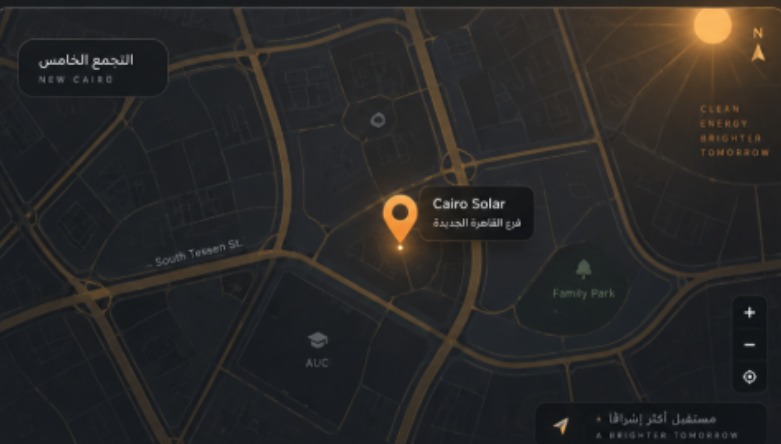
You can now contact Cairo Solar Company, which is one of... Best solar companies In Egypt
Do solar water pumps work in wells?
Yes, Solar powered pumps operate on wells. There are certain types of pumps designed to extract water from deep or shallow wells, and are therefore an ideal option for farms and remote areas that lack electricity. The types of pumps used in wells include:
- Submersible pumps: Usually used to pump water from deep wells.
- Surface pumps: used for wells Shallow.
Solar energy system prices
There are some major factors that affect the prices of solar energy systems. These factors include:
- Equipment Cost: The cost includes Solar powered pumps, solar panels, inverters, storage systems, and supports.
- Installation costs: Installation costs vary depending on the location and type of system, and in general, rooftop installation is more expensive than ground systems.
- System Size: The larger the system (number of solar panels), the higher the total cost.
- Panel efficiency: Panel efficiency affects the amount of energy that can be produced. The boards The highest efficiency is the most expensive.
- Government support and incentives: Governments provide incentives that can reduce the total cost of the system. These incentives play a major role in encouraging investment in solar energy.
- Maintenance costs: Maintenance costs should be taken into consideration, as systems that require less maintenance may be more expensive initially but save money in the long run.
- Difference between companies: There are some differences between companies in the cost of service and provision of system components.

Know more details about Solar pump price In Egypt
One of the best companies specialized in providing this service is Cairo Solar, a leading company in the field of solar energy, which can be easily contacted by calling any of the following numbers (201014663000) or (201014664000).
In conclusion, we have it in Cairo Solar There are many types of Solar powered pumps, and since there are some differences in the method of use and in the features of each of them, our customers can seek help from our team of engineers and technicians in order to obtain the best types suitable for them.