Today, agriculture is no longer just a plow, soil, and seeds. It has become a complex system that relies heavily on technology and energy. With rising electricity costs and environmental pressures, a fundamental question is looming: How can agriculture continue to produce efficiently without draining energy? Solar Energy for Agriculture is no longer a luxury; it's a critical component of the sustainability and profitability equation. From using solar energy to power irrigation systems to developing smart lighting technologies in greenhouses, there are endless opportunities to reduce waste and achieve a balance between production and the environment. In this article, we learn more about how to save electricity in agriculture and why solar energy is essential.

Why should you use solar energy?
Solar energy is one of the most important renewable energy sources that should be relied upon for several reasons, the most important of which are the following:
- It is a renewable and sustainable resource.
Solar energy is a renewable energy source, meaning it does not run out and can be used sustainably over the long term. The sun provides tremendous energy that can be harnessed to generate electricity and heat, reducing dependence on fossil fuels.
- Reducing carbon emissions
Using solar energy helps reduce carbon and greenhouse gas emissions, helping combat climate change. Solar energy produces no emissions during electricity generation, making it an environmentally friendly option.
- Reduce energy bills
Installing solar energy systems can significantly reduce electricity bills. Users can generate a significant portion of their energy needs from the sun, reducing their dependence on the traditional electrical grid.
- Increase energy efficiency
Solar energy helps improve energy efficiency in homes and businesses. By using solar panels, individuals can control their energy consumption and reduce associated costs.
- Economic benefits
Solar energy is a good long-term investment. As solar energy becomes more widely used, equipment costs and utility bills decrease, and state tax incentives help reduce initial costs.
- Improving public health
Reducing dependence on fossil fuels through the use of solar energy contributes to improving air quality and reducing pollution, which benefits the overall health of individuals.
- Multiple uses
Solar energy can be used in a variety of applications such as water heating, electricity generation, and home heating, making it a flexible and suitable option for various needs.
Based on these reasons, it becomes clear that using solar energy is not only an environmentally sound choice, but also a sustainable economic investment that benefits individuals and communities as a whole.
Solar Energy for Agriculture
Solar Energy for Agriculture is a vital topic farmers are exploring, as it contributes to improving agricultural production efficiency and reducing costs. Several strategies and techniques can be used to achieve this, including the following:
Use of solar energy
Using Solar Energy for Agriculture is an effective solution, which can be used in the following:
- Operating irrigation systems: Solar-powered irrigation systems rely on solar panels to provide the energy needed to operate the pumps, reducing reliance on the traditional electricity grid and ensuring the continuity of agricultural operations even during power outages.
- Improving productivity: Solar energy contributes to increased agricultural productivity by providing the energy needed to operate agricultural equipment and cool produce, which improves crop quality.
- Sustainability EconomicSolar energy investments are considered long-term investments, as they reduce operating costs after the system is installed, which achieves returns.EconomicGood for the long run.
Providing electricity in agriculture│Photovoltaic agriculture
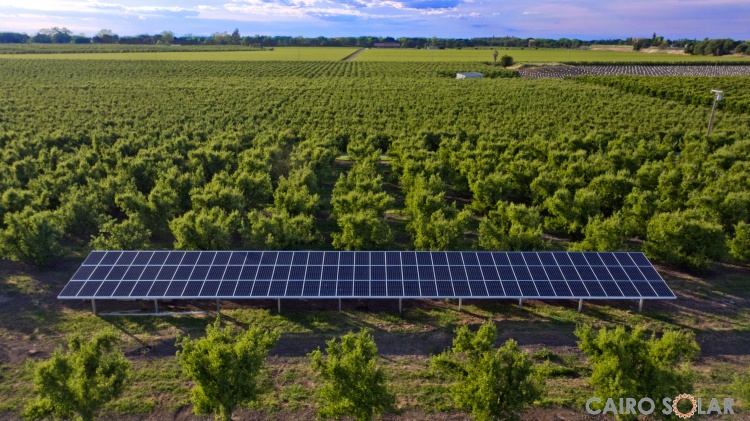
Photovoltaic farming combines crop production with solar energy generation, enabling dual-use of land. This technology increases agricultural productivity while reducing negative environmental impact. It also helps produce clean energy, which farmers can sell to the grid, providing an additional source of income.
Improve energy efficiency
Energy efficiency in agriculture can be improved by:
- Equipment Maintenance: Keeping farm equipment in good condition helps reduce energy consumption.
- Improved insulation: Improving the insulation of agricultural buildings reduces the need for energy for both heating and cooling.
- Avoid unnecessary travel: Reducing trips through farmland helps save fuel and energy.
Reasons to consider when using solar energy
When considering Solar Energy for Agriculture, farmers must first consider ways to utilize solar energy. There are a number of factors to consider to ensure system efficiency, the most prominent of which are:
- Amount of solar radiation at the site
The intensity of the sun varies from one region to another, so when choosing a place to install the solar system, you must choose an open and sunny location.For mostDaylight hours, and it is best to conduct a climate feasibility study to determine the amount of solar radiation throughout the year.
- Determine actual energy needs
The amount of electricity required to operate appliances or equipment must be calculated, as this helps determine the number of solar panels and the size of batteries required.
- Installation and maintenance costs
This refers to the initial cost, which includes the cost of the panels, batteries, inverter, and system installation. Solar energy requires relatively little maintenance, but the cost of replacing batteries every few years must be taken into account.
- Provide adequate space
Solar panels need an open, unshaded space where the panels are installed in a specific direction to get the maximum benefit.
- Storage or network connectivity
If there is no nearby electricity grid, batteries must be installed to store energy for use at night or during cloudy weather. If grid connection is available, the surplus can be sold or used as an alternative source.
- System lifespan
Solar panels typically last 20 to 25 years, but when purchasing, you should ensure the quality of the product and the availability of appropriate warranties.
- Surrounding environment (dust, rain, wind)
In areas with high dust, the farmer or customer will need to clean the solar panels periodically, while in areas exposed to high winds, the panels must be securely installed.
- Technologies used
Modern, highly efficient panels and systems should be chosen, preferably from reliable companies with experience in installation and after-sales service.
Agricultureand irrigationSolar powered
The concept of solar Energy for Agriculture and using solar energy in irrigation refers to using the energy generated by solar panels to operate agricultural equipment and water pumps used in irrigation systems. solar Energy for Agriculture and irrigation by:
- Water pump operation: There are two types of pumps: surface or submersible. These pumps are solar-powered to pump water from wells or reservoirs. This water is used in irrigation systems such as drip or sprinkler systems.
- Operate smart control systems: such as timers and humidity sensors that automatically regulate the timing and amount of watering.
- Operating cooling or ventilation equipment: especially in greenhouses.
- Lighting and surveillance systems: This refers to the use of solar energy to light farms or operate cameras and security devices.

Read about Types Of Solar Energy
Solar irrigation in Egypt
Given the challenges facing agriculture in Egypt, such as rising fuel prices, water shortages, and the expansion of agricultural land in desert areas, solar-powered irrigation has become a practical and effective solution that helps develop agriculture, reduce overhead costs, and even increase productivity. This has led to the emergence of a new concept known as "solar irrigation."
Solar irrigation refers to the use of solar panels to generate electricity to operate water pumps used to irrigate agricultural land, instead of pumps powered by diesel or conventional electricity. The importance of solar irrigation in Egypt is particularly evident due to:
- Sunshine all year round: Egypt is one of the richest countries in solar radiation, with an average of 9 hours of sunshine per day in most areas.
- The expansion of new agricultural areas: such as the new countryside and the new delta, which are often far from the electricity grid.
- Rising fuel prices: Since running pumps on diesel has become too expensive, farmers are starting to consider solar as an option.FreeJust for energy.
- Government support and initiatives: The Egyptian government supports agricultural solar energy projects, in cooperation with entities such as the Micro, Small and Medium Enterprise Development Agency and the Agricultural Bank of Egypt.
In conclusion, solar Energy for Agriculture has been a priority for farmers and investors in recent years in Egypt, given the availability of both free and practical alternatives. To learn more about solar energy systems and their installation, contact us at. cairo solar On the following number (+201014663000) or (+201014664000).
You may be interested in: Solar farm cost